
Pickleball paddle performance and production consistency come from the interaction of face material, resin and layup, core, thickness, shape, perimeter, handle, surface, weight, and balance. Material names are useful, but they should not be treated as a complete specification or a reliable quality ranking by themselves.
Key Material Decisions
- Choose face materials according to the product brief and complete construction, not only marketing terminology.
- Specify core material, thickness, geometry, density direction, and bonding expectations where relevant.
- Treat 3K, 12K, and 18K primarily as tow-count or fabric-description terms, not automatic performance grades.
- Verify supplier-specific carbon-fiber grade claims through documentation when they are commercially important.
- Use physical samples to evaluate the finished system before approving production.
Face Material Options
Fiberglass and Composite Faces
Fiberglass and composite face constructions can support a range of product positions and playing characteristics. The result depends on fabric, layup, resin, surface, core, thickness, and weight distribution. Buyers should specify the intended market and evaluate complete samples rather than assume one universal fiberglass feel.
Carbon-Fiber Faces
Carbon-fiber constructions are commonly described by fiber grade, tow count, weave, or surface appearance. Terms such as T700, 3K, 12K, and 18K describe different aspects and should not be used interchangeably. A grade claim should be supported by supplier documentation when required. Tow count and weave appearance do not automatically establish finished-paddle strength, control, or durability.
Aramid and Hybrid Constructions
Aramid-fiber and hybrid laminates provide additional design directions, but the fiber name still does not define the complete product. Confirm fiber arrangement, supporting layers, resin, core, surface, and target specification. Sampling is necessary because changing one face layer can alter weight, stiffness, sound, finish, and production behavior.
Understanding Polypropylene Honeycomb Cores
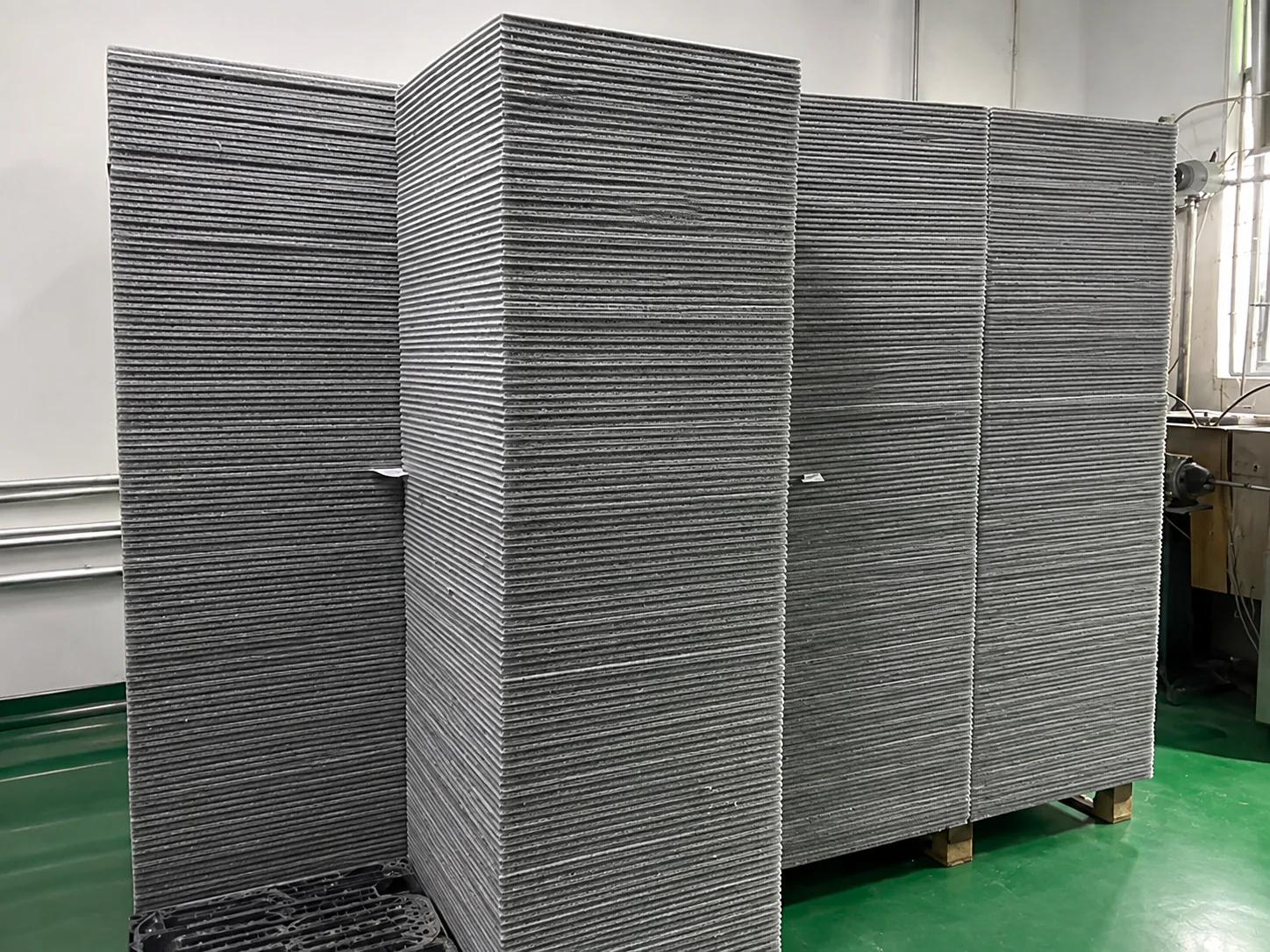
Polypropylene honeycomb cores are widely used because they can support lightweight sandwich constructions. Core behavior varies with thickness, cell geometry, material density, consistency, bonding, surrounding reinforcement, and the complete paddle design. Buyers should avoid specifying only 'PP honeycomb' without the other construction details needed for repeatable sampling.
Core Thickness
Common market descriptions include thinner and thicker core formats, but the numerical thickness is not a performance guarantee. Thickness interacts with face construction, shape, weight, handle, and perimeter. A brand should choose a target through sample evaluation and record an acceptable production tolerance.
Perimeter and Structural Reinforcement
Edge guards, wrapped composite layers, foam, frame structures, and handle integration can be used in different combinations. Confirm exactly which reinforcement is included and why it is being proposed. Avoid assuming that a label such as thermoformed identifies every structural detail.
Surface and Finish
Surface texture and finish may be created through material selection, peel ply, coating, print, or other processes. The buyer should approve appearance and any measurable or rule-related requirement separately. Claims about competition compliance should be supported by the relevant current approval or test evidence, not inferred from texture alone.
How Buyers Should Compare Material Samples
- Keep shape, thickness target, grip, and weight range consistent where possible.
- Document every material, layup, core, perimeter, and process difference.
- Measure dimensions, thickness, weight, and balance before play evaluation.
- Assess surface, edge, bonding, handle, sound, comfort, and playing response using a defined method.
- Review samples after the agreed durability or use evaluation.
- Freeze the selected sample and written construction before production.
Frequently Asked Questions
Is 18K carbon fiber automatically better than 3K carbon fiber?
No. Tow-count descriptions do not create a universal quality ranking. Finished performance depends on fiber grade, fabric, layup, resin, core, structure, process, and design.
Does a thicker core always provide more control?
No. Core thickness affects the system, but face construction, geometry, weight, balance, surface, and player evaluation also influence the result.
Is every paddle labeled T700 made from the same material?
Not necessarily. If the grade is commercially important, request supporting supplier documentation and confirm the complete laminate specification.
What is the best material for a private-label paddle?
The best option is the one that meets the target user, product position, performance direction, price structure, production requirements, and approved sample criteria.
Buyer Resource Library